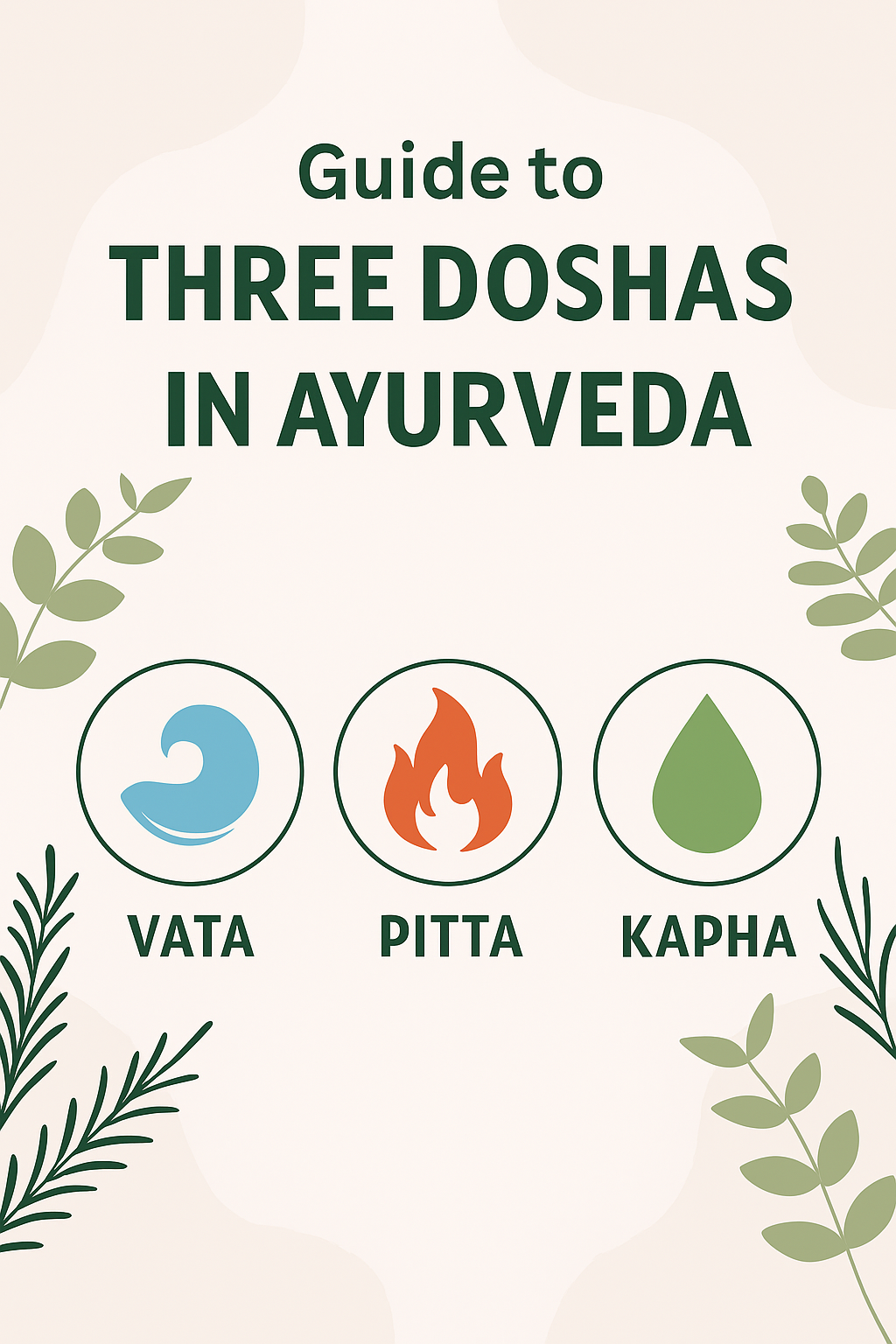
Ayurveda, the ancient science of life, explains that every living being is a reflection of nature. Just like nature is made up of the five great elements — earth, water, fire, air, and space — our body is also created from these elements. The unique combinations of these elements form what we call the three doshas: Vata, Pitta, and Kapha.

These doshas are the fundamental energies that govern not only our physical health but also our mental state, emotions, and personality. By understanding the doshas, we can learn about our Prakriti (our natural constitution), make better lifestyle choices, and maintain balance in body and mind.
In this article, we will explore:
What are doshas and where they come from
Characteristics of Vata, Pitta, and Kapha constitutions
How imbalance in doshas leads to disease
Practical tips for identifying your dosha and bringing it into balance
The Concept of Doshas
The Sanskrit word dosha means “that which can go out of balance.” In Ayurveda, the three doshas are:
Vata – formed by air and space
Pitta – formed by fire (with a little water)
Kapha – formed by earth and water
Each dosha represents certain physical, emotional, and mental traits. While we all have all three doshas within us, usually one or two are dominant, shaping our unique body type and personality.
This unique constitution is called Prakriti. No two people have the same Prakriti, which is why Ayurveda treats individuals rather than diseases in isolation.
Vata Dosha: The Energy of Movement

Elements: Air + Space
Qualities: Light, dry, cold, mobile, irregular
People with dominant Vata are usually thin, with a light bone structure and a lean body. They often find it hard to gain weight and may appear delicate.
Physical Characteristics of Vata
Slim, light frame
Dry skin and hair
Quick movements, restless energy
Variable appetite and digestion
Tendency to feel cold easily
Mental and Emotional Traits
Vata types are highly creative, imaginative, and active thinkers. They have many ideas, are quick learners, and often excel in artistic or innovative fields. However, their mind can also be restless and easily distracted.
Health Challenges
Since Vata is irregular and mobile, people with Vata constitution may have a weaker immune system and are more prone to illnesses such as:
Digestive issues (constipation, gas, bloating)
Anxiety, worry, or insomnia
Joint pain or stiffness
Dryness in skin and hair
Pitta Dosha: The Energy of Transformation
Elements: Fire + Water
Qualities: Hot, sharp, oily, intense, penetrating
People with dominant Pitta have the fire element strongly influencing their body and mind. They often have a medium build with good muscular strength.
Physical Characteristics of Pitta
Medium height and weight
Warm body temperature
Strong appetite and powerful digestion
Tendency toward reddish skin or freckles
Can develop premature graying or thinning of hair
Mental and Emotional Traits
Pitta types are determined, focused, and natural leaders. They are ambitious, hardworking, and have a strong sense of justice. However, they can sometimes become impatient, critical, or aggressive.
Health Challenges
Because of excess heat, Pitta imbalance can lead to:
Acid reflux, gastritis, or ulcers
Skin problems like rashes, acne, or inflammation
Anger, irritability, or frustration
Liver disorders, jaundice
Migraines and excessive sweating
Kapha Dosha: The Energy of Stability

Elements: Earth + Water
Qualities: Heavy, slow, steady, cool, moist
Kapha is responsible for strength, stability, and endurance in the body. People with dominant Kapha are often the healthiest and most resilient physically.
Physical Characteristics of Kapha
Strong, well-built frame
Smooth, radiant skin
Thick hair and healthy complexion
Slow metabolism and strong immunity
Steady energy, good stamina
Mental and Emotional Traits
Kapha people are calm, compassionate, loyal, and grounded. They are emotionally stable, forgiving, and enjoy steady routines. However, they may sometimes struggle with attachment, lethargy, or resistance to change.
Health Challenges
When Kapha becomes imbalanced, it can cause:
Weight gain and obesity
Water retention and swelling
Respiratory issues like sinus congestion or asthma
Excess sleep and sluggishness
Depression or lack of motivation
Can People Belong to Just One Dosha?
Not really. Most people are a combination of two doshas (like Vata-Pitta, Pitta-Kapha, or Vata-Kapha). Only a few rare individuals have a perfect balance of all three doshas — known as Tridoshic constitution.
This unique balance of doshas is what makes each person an individual. Understanding our dominant dosha helps us choose food, lifestyle, and habits that keep us in alignment with nature.
The Importance of Balance
Ayurveda teaches that health is balance and disease is imbalance. When we live according to our natural constitution, eat the right foods, and follow a lifestyle suited to our dosha, our body and mind remain in harmony.
On the other hand, poor lifestyle choices — such as eating unsuitable foods, irregular sleep, stress, or ignoring seasonal changes — disturb the doshas. This imbalance leads to toxin buildup (Ama), eventually causing disease.
Example of Dosha Imbalance
Let us consider the case of a lady with dominant Kapha dosha. Ideally, she should live in a warm, dry climate and eat warm, light foods. However, she lived in a cold, damp area and ate heavy, oily meals.
Over time, her Kapha became imbalanced, and she developed respiratory infections, mucus buildup, water retention, and a feeling of heaviness.
Similarly, if Pitta is aggravated, it can cause inflammation, skin disorders like psoriasis, acidity, migraines, jaundice, or rashes.
If Vata is aggravated, it can cause anxiety, dryness, constipation, and joint problems.
Balancing the Doshas
The good news is that Ayurveda provides simple, natural ways to bring doshas back into balance. Some effective methods include:
- Diet
Vata: Favor warm, moist, grounding foods like soups, cooked grains, and ghee.
Pitta: Eat cooling, soothing foods like cucumbers, melons, leafy greens, and avoid excess spicy food.
Kapha: Choose light, dry, and warming foods like beans, spices, and avoid heavy or oily meals.
- Herbal Remedies
Ayurveda uses herbs like Ashwagandha, Triphala, Turmeric, Tulsi, and Brahmi to restore balance naturally.
- Yoga and Pranayama
Vata: Gentle, grounding postures with slow breathing.
Pitta: Cooling, calming postures with deep breathing.
Kapha: Energizing postures and dynamic breathing practices.
- Meditation and Mindfulness
Calming the mind through meditation, chanting, or mindfulness practices helps restore inner harmony.
Ancient Wisdom: Microcosm and Macrocosm
Ayurveda beautifully states the principle:
“Yat Pinde Tat Brahmande” – That which is in the body is also in the cosmos.
This means the microcosm (our body) is not separate from the macrocosm (the universe). Whatever laws govern nature also govern our body. When we live in harmony with nature, we align ourselves with universal rhythms and experience health, peace, and longevity.
Final Thoughts
The science of Ayurveda teaches us that health is not just about curing disease but about living in balance. By understanding our dosha, we gain deep insight into our physical tendencies, emotional patterns, and mental state.
Whether you are predominantly Vata, Pitta, Kapha, or a combination, the key is awareness. Once you know your constitution, you can make conscious choices in food, lifestyle, exercise, and mindset to maintain harmony.
https://www.nccih.nih.gov/health/ayurvedic-medicine-in-depth